Sunday, November 14, 2010

Week Reflection

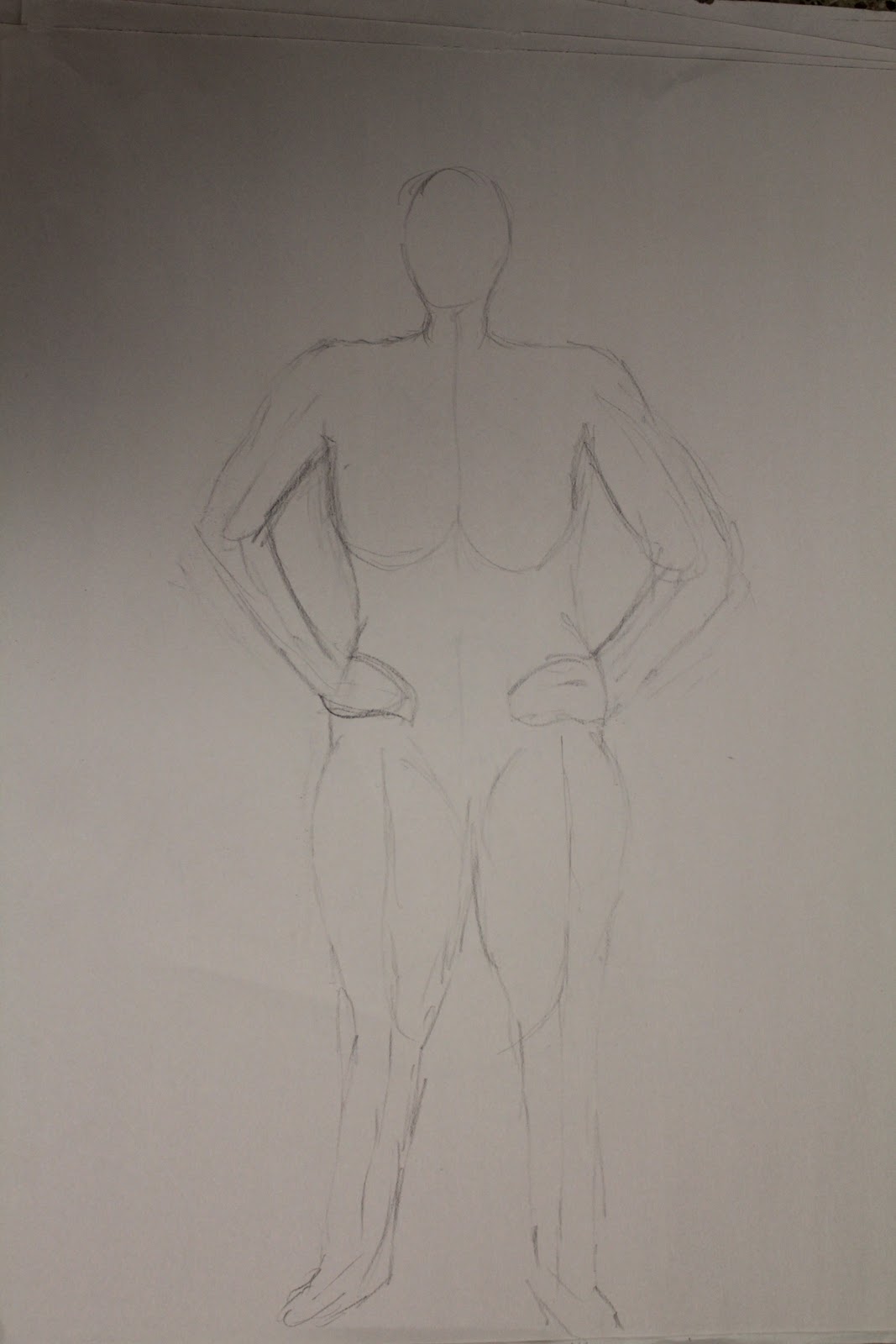
Due to mid-program review we only had one class period this week, which, to be honest was a big relief! It is the time of the semester again when classes get more intense and full of expectations. For several reasons, I have found it difficult to focus and find myself falling behind rather than improving. I have noticed that when I am drawing the figure now, I get so caught up in trying to remember all of the things that we have covered in class, like legs and feet, that I completely forget to draw the rib cage. In the longer drawings it is easier to go through the drawing and figure out what is missing, but in the gesture drawings I run out of time and sometimes miss really important things. I feel like I need to go back to the ideas that we talked about at the beginning of the semester to make sure that I at least get the whole figure on the page.

We also had a shell drawing due this week. When working on this shell drawing, I realized that I am still improving and that I am getting better at seeing contour lines, which I really struggled with at the beginning of the semester. We critiqued the shell drawings in small groups. My group noted that I used the page well and had a good long axis. They also said that I had good line variation but needed to add more contour lines. I plan on re-working parts of the drawing to make it work better as a drawing.

I am continuing to struggle with the manikin. I enjoy learning about the different muscles, where they are and what their jobs are.  I find the manikin work interesting, but very frustrating. It seems that the more I work to fix the muscles, the more likely it is to fall apart or be shaped completely wrong. There are several parts that I need to redo and other parts that need to be refined.

I spent a while today looking at figure drawings done by other people and specifically looked at the use of line. It is fascinating to observe how very different looking lines can be used to describe the same thing effectively. These are two examples that I found:

In the first drawing the lines are dark and thick while in the second drawing they are thin and mostly lighter and much crisper.  These are very different approaches to the use of line, but we still read these both as figure drawings.

Monday, November 1, 2010

Midterm Reflection

It's hard to believe that over half of the semester is over already! I have learned a lot so far and am surprised by the progress that I have made.  Life drawing has certainly challenged me in ways that I've never been challenged before. One of the hardest things for me to get used to was drawing quickly and focusing on the general form instead of details.  In all of my previous art work I have focused more on small details rather than getting the gesture down.  At the beginning of the semester I struggled to even make a decision about where to make my first line in 30 seconds, but now I can get down most of the figure in 30 seconds.  One of my unexpected, ongoing struggles is with the maniken. When I started working on it, I thought that I would be great at it because I love working in three dimensions and working with details.  It seems that the more I work on it, the more frustrating it gets and the more difficult it is for me to create the muscles accurately.  My favorite part of this semester so far was working on the shell drawing for homework. While I found the process frustrating, I enjoyed looking at the shell and taking in all of the details.  I think that in trying to capture the form of the shell using only line really helped me to understand how to capture the figure only using line.  

In the second half of the semester, I am hoping to continue to improve my figure drawing skills. Things that I really need to work on include better understanding how foreshortening affects the way that the figure looks and also continue to learn how to focus more on the form as a whole instead of detail and shadowing.  

Here is a link to my Flickr page: Midterm Portfolio

Wednesday, October 13, 2010

Life Drawing Week 4

This week in life drawing we focused mainly on the rib cage and chest. Learning to draw the "egg" before drawing the rest of the figure (besides the long axis) really helped me to place the figure correctly on the page. It also helped me to see the model as a living, breathing human-being rather that a still life that I was required to draw. 
For me, the most helpful drawings that we did this week were the drawings that used relational measurements. This greatly improved my ability to see proportions. I was much happier with my last drawings using this method than any of my previous attempts without this method.


One of the most challenging things for me this week was to learn to stand farther back from the easel and not grip my charcoal pencil near the tip. I always felt that if I had my hands closer to the tip, I would have more control over what I was drawing. It turns out that gripping the pencil farther back can actually be very rewarding.


This is a drawing done by Alex Kalser. While it does not have the proper proportions or anything close, this depiction of the body is intriguing. I especially enjoyed looking at all of his conscientious line work. The contrast between the thick and thin lines creates a fantastic result.

Monday, October 4, 2010

Life Drawing Week 3

During the 3rd week of life drawing class I found myself feeling overwhelmed, yet fascinated, by all that I did not know about the human body. At first I was skeptical about how much modeling clay and a plastic skeleton could help me draw, but, as I am progressing through this I realize just how detailed our body structure is.  By building these details, it is easier to see them on the model. I plan on redoing some of these muscles so that they fit together more accurately.

I really struggled through the cross-contour drawings that we did of the model because I wasn't exactly sure how I should be going about it, but, I've learned a lot about looking through the process. It also helped me to see the specific curves of the body and how they interact with each other. In the future I know that when doing a cross-contour drawing, I need to learn to use more variation in my line to create movement and believability.

Life Drawing Week 2

The second week of Life Drawing was very intimidating for me. I had never drawn from a model before. That in itself was a great challenge.  To add to this, I am not very good at drawing quickly as I tend to be more detail-oriented.
At the beginning of doing this I was more focused on getting the outline of the figure, because that is the only way that I knew how to draw. After learning about the long axis and about the spine, I found my drawings and the time it took to do them, improving. I learned a lot about the weigh that a single line can create space through the use of varying weight and thickness. Some of the concepts that we discussed like, varying the point-of-veiw to get a more three-dimensional drawing, are still difficult for me to grasp. I believe that this semester is going to be one with a lot of new challenges and one with many failures, but also one with many improvements. I have already learned a lot.

Monday, September 20, 2010

Week 1!

This week in life drawing we studied shells and did two different types of drawings of them. The first drawing we did was a blind contour drawing in which we could not look at the drawing while creating it. This drawing was particularly challenging for me because I was very tempted to look at the drawing and correct the mistakes. My group members said that my lines had varying weight and had a good use of thickness and thinness. They also said that the use of layers was beneficial and mentioned that while some lines were carefully considered, some needed to be slowed down.
The other shell drawing that we did was the continuous contour drawing in which we could not lift the pencil off of the page.  With this drawing it was a relief to be able to look at the paper, however it was also challenging because I constantly had the urge to lift my conte pencil off of the paper. Not being able to do this produced an interesting result. It was also difficult because I was unable to erase an mistakes that I made. 


My favorite part about these activities was looking at and discovering different things about my shell. Every time I looked at my shell I noticed something new. I enjoyed paying attention to the slightest details in color and texture. 

The class period on Thursday was very informative and interesting for me. I learned a lot about the spinal column and the different section in it. I also learned how to quickly draw the most important parts of a subject. 

Monday, September 13, 2010

Introductory Blog Post

I am a junior in the Studio Art program at UW-Stout.  I first decided to major in art at the end of high school after having great experiences in my art classes. I am getting a concentration in ceramics along with minors in psychology and math. My work that I am most proud of is my 3-dimensional works, including ceramics. Currently one of my favorite pieces, "Cancer" is in the Furlong Gallery.  


As time has passed I have found that I love complex surfaces. Another one of my favorite projects was the cardboard animal project in 3-D design. I made a porcupine, which was particularly intriguing to me because of the complex texture of the quills. Though making the thousands of quills was redundant and exhausting, the result was impressive. 


My favorite course so far at UW-Stout has been Ceramics 1, closely followed by 3-dimensional design. These courses were favorites because I like working in 3 dimensions and the projects assigned left room for me to put my own spin on them. When I graduate I hope to go on to graduate school for art therapy and pursue a career as an art therapist. 

My favorite materials include my camera and clay. When I work with clay, I am reminded that as humans we are shaped and molded by our environment and everyone in our lives.  I enjoy using my camera’s viewfinder as a way to extract beauty or emotion from a scene.

                              When people see my work, I want them to in a sense lose some of their naivety about the world.  I want them to be able to see the truth rather than the lies that we are fed every day. I usually begin a piece, that is not photography, by looking through photos that I have taken in the past or going for a walk outside for inspiration.